
Welcome Home
Bringing home a new puppy is an exciting adventure, but it also comes with plenty of questions, challenges, and learning experiences. Every puppy is unique, and there may be moments when you wonder if you're doing everything right. Please know that this is completely normal. Raising a happy, well-adjusted puppy takes patience, consistency, and time—and you don't have to do it alone.
At Farm Fresh Doodles, we genuinely care about every puppy long after they leave our home. Whether you have a question about feeding, training, grooming, health, behavior, or simply need a little reassurance, we are always happy to help. No question is too small, and we'd much rather hear from you than have you struggle on your own.
Our goal is to help make your transition as smooth and enjoyable as possible, and we're committed to supporting both you and your puppy every step of the way.
If you ever need assistance, please don't hesitate to reach out.
Email: info@farmfreshdoodles.com
Phone: (580) 695-0825

Breed Information

Sheepadoodles
Coat:
Very thick, heavy, and fluffy with a dense texture. It comes in straight, wavy "fleece," or tight curls
Appearance:
Striking, high-contrast, patchy black-and-white "panda" or tuxedo markings. Their shaggy faces often obscure their eyes, and they boast a heavy, sturdy, square-boned frame. They also come in various other colors.
Size:
Depends on parents
-
Mini/Medium -30-50 Ibs
-
Standard 55-85+ Ibs
Temperament:
-
Playful, goofy, and fiercely loyal. They are incredibly focused on their human companions but can sometimes display gentle herding behaviors.
-
The Crowd-Pleasing "Velcro" Watchdog. They offer a highly dramatic visual appearance combined with a protective, deeply loyal nature, providing a natural watchdog presence without standard aggression
Bernedoodles
Coat:
Shaggy, thick, and typically wavy or curly. They are celebrated for their multi-colored coats.
Appearance:
Their famously distinct tri-color pattern (black, rust-brown, and white) mimics a Bernese Mountain Dog. They possess a stocky, giant teddy-bear aesthetic with wide paws, a shaggy muzzle, and long, floppy ears. They often appear with ranging colors like black, merle, and cream as well.
Size:
Depends on parents
-
Mini/Medium - 20-50 Ibs
-
Standard - 55-85+ Ibs
Temperament:
-
Calm, affectionate, steady, and silly. They tend to have a slightly lower, more relaxed energy level indoors than retrievers.
-
They inherit the gentle, easygoing "gentle giant" disposition of the Bernese Mountain Dog, making them ideal for owners who want a large, low-key indoor companion dog.


Goldendoodles
Coat:
Soft, dense, and low-to-non-shedding. It ranges from shaggy/wavy to tight curls. Common colors include gold, apricot, cream, red, and black.
Appearance:
Classic "teddy bear" look. They feature athletic, balanced builds, expressive round eyes, and soft, floppy ears.
Size:
Depends on the parents
-
45-70 lbs
-
15-40 lbs
Temperament:
-
Exceptionally friendly, outgoing, social, and eager to please. They are highly intelligent and adapt easily to family life.
-
Their legendary social predictability and gentle compliance make them the gold standard for families with young children and multi-pet households.
Irish Doodles
Coat:
Single-coated, soft, and long. It displays a loose, flowing wave or light curl pattern. The signature color is a striking, deep auburn or vibrant red.
Appearance:
Sleek, athletic, and notably elegant. They feature narrow heads, long muzzles, lean limbs, and a high-set, curving tail that gives them a graceful silhouette compared to blockier doodles.
Size:
Depends on parents
-
Mini/Medium - 25-35 lbs
-
Standard - 40-70 lbs
Temperament:
-
Extremely energetic, bright, active, and eager to please. They love having a job to do, exhibit a high play drive, and thrive in fast-paced outdoor settings.
-
Irish Doodles are exceptionally fast, agile, and well-suited for hiking, running, swimming, or agility training.


Cavapoos
Coat:
Silky, fine, and medium-to-long. It is usually wavy or loosely curled. Colors range broadly across merle, chestnut-red, cream, tri-color, black, and tan.
Appearance:
Permanently puppy-like. They boast massive, dark, round eyes, a short muzzle, and heavily feathered ears that frame a sweet face.
Size:
Depends on parents
-
Standard - 12-25 Ibs
Temperament:
-
Deeply affectionate, gentle, cuddly, and social. They crave constant human companionship and are typically less vocal than other small terrier-poodle mixes
-
Their natural empathy, compact sizing, and highly manageable, gentle energy make them premier companion lapdogs that excel in apartments or as emotional support animals.
Preparation
#1
All puppies receive their first round of vaccinations at 7 weeks of age before going to their new homes. We strongly recommend scheduling your puppy's second vaccination appointment before pickup to ensure availability with your veterinarian. The second round of vaccinations should be administered when your puppy is 10 weeks old.
Schedule Your Vetrinarian Visit
#2
The following items are essential to have ready before bringing your new puppy home:
-
Puppy Food – Choosing a high-quality puppy food that fits both your puppy's nutritional needs and your family's lifestyle is important before pickup. A sample of Hill's Science Diet Puppy Chicken & Brown Rice Recipe will be provided when you pick up your puppy. We recommend gradually mixing this food with your chosen puppy food over several days to help your puppy transition comfortably and reduce the chance of digestive upset.
-
Appropriate Crate – We recommend using a wire crate with a removable divider. The divider allows you to adjust the living space as your puppy grows, creating a sleeping area that is appropriately sized. Because puppies naturally avoid soiling the area where they sleep, a properly sized crate can be an excellent aid in house training.
-
Food and Water Bowls – We recommend stainless steel bowls over plastic, as they are more durable, easier to sanitize, and less likely to harbor bacteria. A waterproof feeding mat is also helpful for keeping your floors clean and minimizing spills.
-
Leash & Harness – A 5- to 6-foot leash paired with a properly fitted harness is ideal for daily walks and early leash training. A harness helps provide better control while reducing strain on your puppy's neck.
-
Collar & Identification Tag – Your puppy should wear a properly fitted collar that allows you to comfortably fit two to three fingers between the collar and your puppy's neck. Check the fit regularly, as growing puppies quickly outgrow their collars. We also strongly recommend attaching an identification tag with your puppy's name and your current contact information. In the unfortunate event that your puppy becomes lost, proper identification greatly increases the chances of a safe return home
-
Treats + Toys - For play and training!
Order Puppy Food + Supplies
#3
Pet Insurance – We highly recommend enrolling your puppy in pet insurance as early as possible. Unexpected illnesses and accidents can happen at any stage of life, and having coverage can provide valuable peace of mind while helping offset veterinary expenses. Our family trusts and uses Trupanion, and we've had a great experience with their coverage and customer service.
Consider Pet Insurance


General Care + Training
General Care Guide
Nail Trimming
Start trimming your puppy's nails at a young age so they become comfortable with the process. Begin by clipping just one paw while your puppy is calm or sleepy, then gradually work up to a full trim as they gain confidence.
Tips for Nail Trimming:
-
Practice trimming for several days in a row rather than waiting until the nails become long.
-
Clip only the tip of the nail where it begins to curve downward, keeping the clippers parallel to the bottom of the paw.
-
Trim small amounts at a time to avoid cutting the quick, which can be painful and cause bleeding.

Teeth Brushing
Bathing
Just like people, puppies benefit from regular dental care. Brushing your dog's teeth several times a week helps prevent plaque buildup, gum disease, and bad breath. While dental chews are a great addition to your routine, they should not replace regular tooth brushing.

Wavy-coated doodles should typically be bathed every 4–6 weeks, while curly-coated doodles usually benefit from a bath every 2–3 weeks. Bathing too often can dry out the skin, while waiting too long may contribute to tangles and matting. Always use a shampoo formulated specifically for dogs, as their skin has a different pH balance than ours.
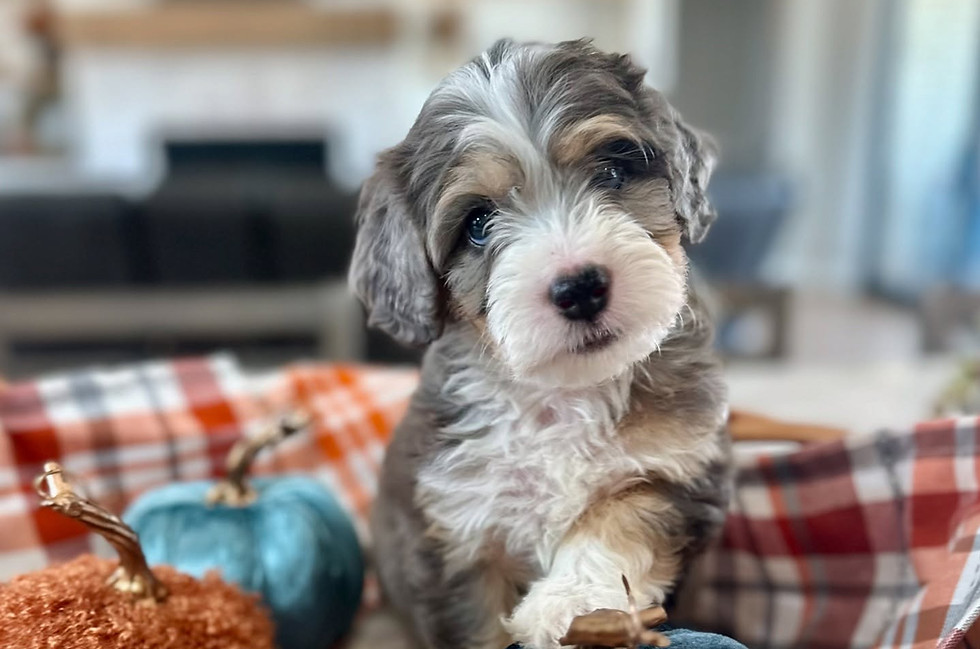
Regular brushing at home is essential, but routine visits to a professional groomer are just as important. We recommend finding a groomer who has experience with doodles or is familiar with caring for their unique coats to keep your puppy comfortable, healthy, and looking their best.
Grooming
Brushing
Most Importantly

Regular brushing is one of the most important parts of keeping your doodle's coat healthy, soft, and free of mats. The earlier you begin brushing your puppy, the more comfortable they will become with the routine.
Tips for Brushing:
-
A slicker brush works best—we personally love Chris Christensen slicker brushes.
-
Brush all the way to the skin, working in layers rather than only over the top of the coat.
-
Start at the feet and work your way up the body, finishing with the head and tail.
-
Brush in the direction of hair growth, adding small sections of coat with each stroke.
-
Around 8 months of age, your puppy will begin transitioning into their adult coat. During this time, more frequent brushing is needed to remove the puppy coat and prevent matting.
-
If you prefer to keep your doodle in a longer coat, plan on doing a thorough brush and comb-out at least once a week (about 5–10 minutes) to keep tangles from turning into mats.
Crate Training
Although some owners feel guilty about crate training, it is one of the most valuable tools you can use when raising a puppy. Dogs naturally seek out small, enclosed spaces because they provide a sense of security and comfort. When introduced properly, a crate becomes a safe place for your puppy to relax, sleep, and feel at ease. It is also an essential tool for house training, since puppies naturally avoid soiling the area where they sleep, and it can be invaluable during travel or emergency situations.
We begin introducing our puppies to a crate at around five weeks of age, so they already have a great foundation before coming home with you. Continue building on this positive experience by following these tips:
-
Set up the crate properly. We recommend a wire crate with an adjustable divider. Keeping the crate just large enough for your puppy to stand, turn around, and lie down comfortably helps discourage accidents. As your puppy grows, simply move the divider back until it can eventually be removed.
-
Make the crate inviting. Place a few favorite toys inside to help your puppy feel comfortable. We also highly recommend a Snuggle Puppy® toy with its heartbeat simulator and warming pack, which can provide extra comfort during the transition to a new home.
-
Introduce the crate gradually. Begin with short five-minute sessions. If your puppy cries, wait until they have settled before letting them out. Practice several times each day, then gradually increase the time to 15 minutes, 30 minutes, and beyond.
-
Create positive associations. Feed meals or offer treats inside the crate so your puppy learns to view it as a rewarding, happy place.
-
Use a consistent cue. Every time it's time for bed or a crate break, say the same phrase, such as "Crate time" or "Nighty-night." Before long, your puppy will begin going to their crate on cue.
-
Leave the crate door open when you're home. Allow your puppy to explore it freely and choose it as a place to rest or nap.
-
Use the crate when you can't supervise. Whether you're running errands, showering, or busy around the house, the crate (or an exercise pen) provides a safe place for your puppy when you cannot watch them closely.
-
Gradually extend overnight crate time. As your puppy matures and their bladder develops, they can slowly work up to sleeping 6–8 hours overnight without needing a potty break.
-
Use the crate responsibly. Crates should never be used as punishment or for extended periods throughout the day. They are meant to provide security, rest, and structure. Always make sure your puppy has access to fresh water whenever appropriate and is receiving plenty of exercise, attention, and potty breaks throughout the day.
House Training
House training is most successful when you establish a consistent routine from the very beginning. Every time your puppy goes potty, they are learning where they should (or shouldn't) go, so consistency is key. While every puppy learns at a different pace, it can take up to eight weeks after coming home for them to become reliably house trained.
Our puppies are introduced to puppy pads before going to their new homes, but transitioning them to outdoor potty training will be the new owner's responsibility. One helpful method is to place a puppy pad near the door you plan to use for potty breaks. Watch your puppy closely, and when they head toward the pad, quickly take them outside before they have a chance to use it. With repetition, they'll begin to associate going outside with potty time.
We know house training can seem overwhelming at first, but with patience, consistency, close supervision, and positive reinforcement, it can be a smooth and rewarding process.
-
Watch for potty cues. When your puppy is awake and indoors, supervise them closely. Common signs that they need to go include: sniffing the floor, wandering off or trying to hide, circling, and squatting.
-
Take frequent potty breaks. Puppies between 8–10 weeks of age typically need to go outside about every 30 minutes while awake. As they grow, you can gradually extend the time between potty breaks until they begin letting you know when they need to go out.
-
Remember mealtime timing. Most puppies will need to potty about 30 minutes after eating. Setting a timer for the first few weeks can help establish a routine. We like the app Puddle & Pile for tracking meals and potty breaks.
-
Use the same potty cue every time. Choose a simple phrase like "Go potty" or "Go outside" and use it consistently. When your puppy goes in the correct spot, immediately offer enthusiastic praise and, if you'd like, a small treat or another reward.
-
Handle accidents calmly. Clean accidents thoroughly with a pet-safe odor eliminator to remove lingering scents. Never punish or scold your puppy after the fact—they won't understand why you're upset. If you catch them in the act, calmly interrupt them with a firm "No," then take them outside right away. Accidents are part of the learning process and simply mean your puppy needed more supervision or an earlier potty break.
-
Create a bedtime routine. Remove food and water about 2–3 hours before bedtime. Most puppies at this stage can sleep through the night without needing a potty break and should be ready to go outside first thing in the morning.
-
Start the morning off right. As soon as your puppy wakes up, carry them directly to their designated potty spot outside before giving them a chance to wander around the house.
Bell Training

Our Choice of Training
Teaching your puppy to ring a bell when they need to go outside can be a great addition to your house-training routine. Hang the bell near the door you will use for potty breaks. Each time you take your puppy outside, gently encourage them to ring the bell with their nose or paw before opening the door. Offer plenty of praise, then lead them directly to their designated potty area.
In the beginning, your puppy may ring the bell simply because they want to go outside or play—and that's perfectly normal. Whenever they ring the bell, consistently take them outside to their potty spot first. This helps them learn that ringing the bell means it's time for a potty break, not playtime.
For additional tips and step-by-step guidance, check out the helpful resource below to learn more about successful bell training.
Other Training
There are numerous types of training out there, below are a few to consider for your pup!
Online Training
Online training is a convenient way to build good habits and strengthen your bond with your puppy from the comfort of home. Step-by-step videos allow you to learn at your own pace and revisit lessons whenever needed. With consistency and patience, these programs can provide an excellent foundation for lifelong learning.
In-Person/Private Training
In-person and private training provide hands-on guidance tailored to your puppy's unique personality and learning style. A professional trainer can help you address specific behaviors, build confidence, and set both you and your puppy up for long-term success. It won't hurt to research training facilities near you.
Our Recommended Products
Goes together
KONG toys are notoriously durable and are our choice of dog toys.
Adds a nice treat aspect to KONG toys.

BestPet Large Dog Crate
A reliable safe haven with a divider to grow with your puppy. Choose size depending on your dog

Snuggle Pup with heartbeat
To help puppies not feel so alone at night.

KONG Stuff'N Dog Toys

KONG Stuff'N Liver Paste

Luckyiren Puppy Doorbell
Our chosen form of potty training.

Hill's Science Diet Puppy
Quality nutrition that we use and recommend for all our pups.
Slow Feeder Bowl
For Puppies that tend to over-eat
Fresh N' Clean Dog Cologne Spray
To freshen pups in between baths
Plum Silky Conditioning Shampoo
Our favorite shampoo to use on our dogs.

Chris Christensen Professional Slicker Brush
Dog Brush

Virbac EPIOTIC® Advanced Ear Cleanser
The ear cleaner recommended by us and our vet.

Baxter & Bella 9 blade dematter
Dog Brush


